


BUY vs RENT: The Ultimate Guide to Choosing Inverter & Battery Backup in 2025
Reliable power backup is no longer a luxury it’s a necessity. From frequent urban power cuts to voltage fluctuations in suburban and rural areas, households and businesses increasingly depend on inverter and battery systems to keep their essentials running.
But when it comes to getting a backup system, one question always arises:
Should I Buy an inverter & battery or Rent it?
This decision impacts your budget, convenience, long-term flexibility, and maintenance responsibilities. While buying has been the traditional route, rental inverter and battery plans have become extremely popular in India-especially among families, tenants, students, and small business owners.
Here is the complete break down every aspect of buying vs renting, discuss the cost differences, service expectations, long-term value, and explain why renting is now considered the smarter, safer, and more cost-effective choice for most users.
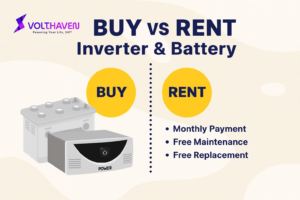
1. Budget & Initial Investment: Large Upfront Cost vs Easy Monthly Plans
Buying: High One-Time Expense
Purchasing a new inverter with a branded battery typically costs ₹20,000 to ₹25,000, depending on capacity, brand, and technology.
This amount must be paid upfront, making it difficult for:
- Tenants
- Students
- Families managing monthly budgets
- Temporary residents
- Small shop owners with limited capital
Renting: Low Monthly Price, High Savings Rental plans begin at just ₹799 per month, allowing users to access the same power backup without spending thousands at once.
This small monthly fee covers:
- Equipment cost
- Installation
- Service & maintenance
- Replacement support
In simple terms: Renting gives you the benefits of ownership without the financial burden of ownership.
2. Maintenance & Service: Who Handles the Responsibility?
Buying: Customer Bears All Maintenance
Once you buy an inverter and battery, all maintenance becomes your responsibility. This includes:
- Water top-ups for tubular batteries
- Terminal cleaning
- Performance checks
- Physical damage repair
- Battery replacement after 3–5 years
Every service visit typically costs between ₹300 and ₹900, not including parts.
Also, you must raise complaints, wait for technicians, and handle follow-ups an inconvenience for people with busy schedules.
Renting: Complete Preventive Maintenance Included
Rental suppliers provide regular preventive maintenance, usually every 4-6 months.
This includes:
- Battery health inspection
- Water top-up
- Voltage & current testing
- Load testing
- Cleaning & tightening connections
There are no service charges, no hidden fees, and no maintenance headaches.
3. Complaints, Breakdowns & Replacement: Waiting vs Instant Support
Buying: The Customer Must Chase the Manufacturer
In case of breakdown:
- You must raise a complaint on the product helpline
- Wait for technician scheduling
- Follow up multiple times
- Arrange for paid repairs (if out of warranty)
- Manage downtime during outages
This is time-consuming and frustrating, especially during seasons with frequent power cuts.
Renting: Immediate Replacement, Zero Downtime
With rental plans, the supplier replaces any defective unit immediately, ensuring continuous backup.
You are never charged for:
- Repair labor
- Replacement parts
- Technician visits
Result: Maximum uptime. Zero frustration.
4. Flexibility & Future Requirements: Fixed Purchase vs Adjustable Plan
Buying: Inflexible After Purchase
If your power needs increase for example, you want to run more fans, lights, or appliances you must:
- Buy a bigger inverter
- Replace the old battery
- Spend more money again
Buying locks you into a fixed system.
Renting: Upgrade Anytime Based on Need
Rental services offer effortless flexibility:
- Need more backup? Upgrade instantly
- Need less backup? Downgrade the plan
- Want to switch model/brand? Possible
- Planning temporary high usage? Add-on battery
-This “pay for what you need” approach makes renting far more practical for modern households.
5. Location Shifting & Transportation: Customer Effort vs Supplier Responsibility
Buying: Heavy, Complicated & Risky to Move
An inverter-battery system weighs between 40 kg to 70 kg.
Shifting it involves:
- Hiring transport
- Risk of battery acid spillage
- Damaging terminals
- Extra reinstallation charges
For tenants who relocate frequently, this is expensive and time-consuming.
Renting: Supplier Handles Everything
Rental providers manage:
- Uninstallation
- Transportation
- Reinstallation
Completely free or included in your plan, This makes renting ideal for people who move often.
6. Short-Term or Temporary Power Needs: No Buying Option vs Perfect Rental Solution
Buying:
Not suitable for:
- Temporary stays
- Seasonal needs
- PG accommodations
- Short-term businesses
- Events or functions
You cannot invest ₹20,000 for a 2-3 month requirement.
Renting: Perfect for short-term users.
Monthly, quarterly, or half-yearly plans allow complete flexibility.
Why Volthaven Is the Most Trusted Inverter & Battery Rental Provider
Volthaven stands out because of its transparency, strict quality checks, and customer-first service model.
1. Every Battery & Inverter Is Tested Before Delivery
We perform a full performance test, load test, and health check.
A testing video is provided for transparency.
2. Only Branded & Trusted Equipment
Volthaven does not use local or refurbished systems.
We supply only major brands known for reliability and long life.
3. Batteries Are Always Within Valid Warranty Period
Battery manufacturing and expiry details are clearly shared.
We use only fresh, strong-condition batteries.
4. Free Delivery & Installation for Plans Above 6 Months
No hidden charges, no surprise bills.
5. Scheduled Preventive Maintenance Every Six Months
A Volthaven technician visits to ensure the system runs at peak efficiency throughout your rental period.
Final Verdict: Renting Wins in 2025 – And Here’s Why
While buying may still work for people who want long-term ownership, renting wins in almost every modern scenario:
| Parameter | Buying | Renting |
| Upfront Cost | Very High | Very Low |
| Maintenance | Customer pays | Included |
| Repairs | Time-consuming | Instant replacement |
| Flexibility | Low | High |
| Shifting | Customer manages | Supplier handles |
| Short-Term Availability | Not possible | Perfect for short-term |
 Previous Post
 Next Post